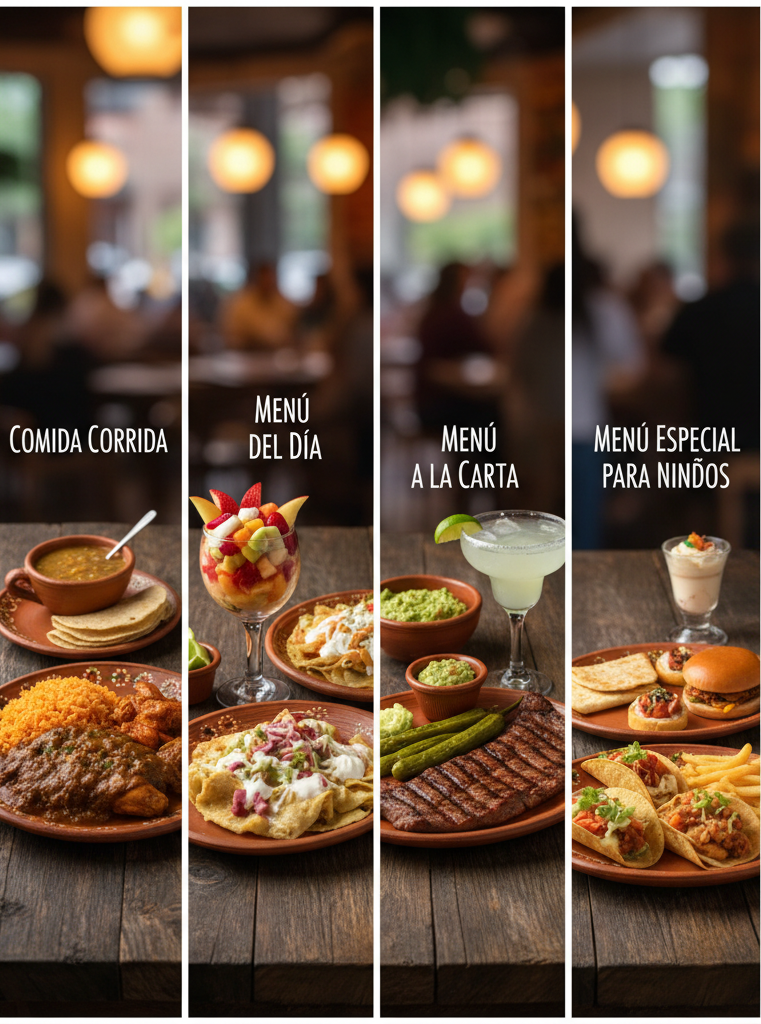


When we talk about menus, whether in restaurants, office cafeterias, or meal delivery services, there are 5 types that appear most frequently. Knowing them helps you choose better, plan your meals, and understand how food offerings are structured today. 🥗🍛
In everyday food services, menus can take different forms depending on the context, the type of service, and the needs of diners. Understanding how menus are classified and what sets them apart helps explain why certain formats are so common in offices, restaurants, and take-away food services.
1️⃣ Set Menu
This is the most traditional type of menu. It consists of a predefined set of dishes served together:
-
Starter + main course + dessert
-
Fixed price
-
Limited options for substitution
✅ Advantages: fast, fixed cost, easy to plan.
💡 Example: an office lunch set with soup, chicken with rice, and fruit for dessert.
2️⃣ À la Carte Menu
The à la carte menu allows you to choose each dish individually:
-
Full flexibility for the customer
-
Price per dish
-
Ideal for those who want to customize their meal
✅ Advantages: total control over what you eat, perfect for varied tastes.
💡 Example: choose a salad, pizza, or burger according to preference.
3️⃣ Tasting Menu
A tasting menu is perfect for those who want to try several dishes in small portions:
-
Small plates presented creatively
-
Usually offers several options of the same culinary style
-
Very common in gourmet restaurants
✅ Advantages: complete gastronomic experience without overeating.
💡 Example: 5 mini international dishes served in sequence.
4️⃣ Kids’ Menu
The kids’ menu is designed for children:
-
Small portions
-
Simple, visually appealing dishes
-
Balanced and easy-to-eat combinations
✅ Advantages: practical for parents, nutritious and fun for kids.
💡 Example: chicken nuggets + mashed potatoes + natural juice.
5️⃣ Daily or Executive Menu
This type of menu is very common in offices and restaurants offering fast and affordable meals:
-
Main course + side dish + drink
-
Fixed price
-
Limited substitutions
✅ Advantages: fast, economical, convenient
💡 Example: soup + stewed meat + rice + beverage.
Although there are many variations, in practice some menu types stand out for their frequency and popularity. Recognizing the most common ones helps identify consumption patterns and makes it easier to choose options that balance price, speed, and convenience.
✅ Conclusion
Knowing the 5 most common types of menus allows you to:
-
Choose what best suits your tastes
-
Plan your meals at home or in the office
-
Identify faster, cheaper, or healthier options
Whether you want an à la carte menu to customize your meal or a daily menu to save time and money, there’s always an option for every need. 🥗🍛🍹
❓ FAQs
Which menu is the most economical?
The daily or executive menu is usually the fastest and most affordable option.
Which menu is ideal for children?
The kids’ menu, with small portions and fun, attractive dishes, is the most recommended.
Which menu is best for trying several dishes?
The tasting menu allows you to try multiple dishes in small portions.